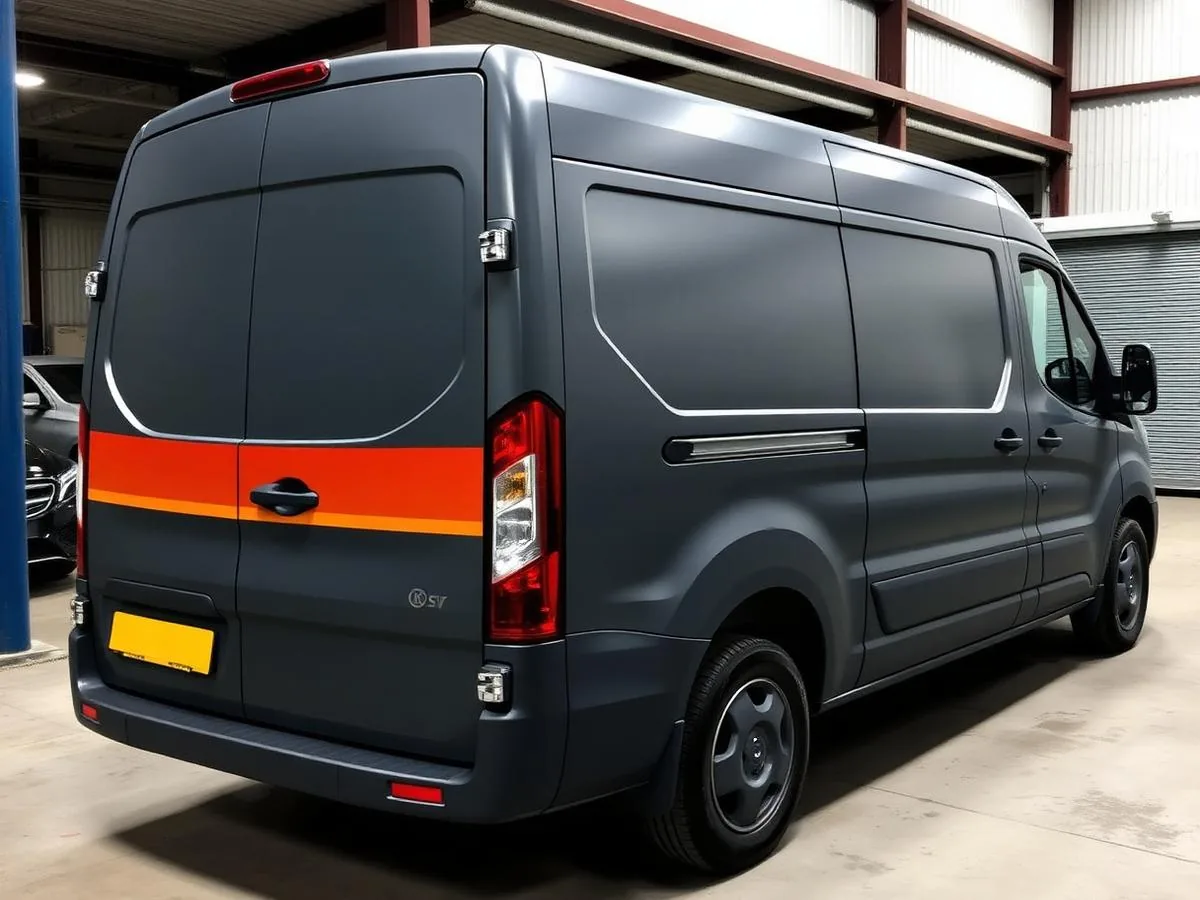
A branded van is the cheapest advertising a trade business will ever buy, and the most punished. It gets jet-washed, gritted, kerbed and parked outside in a Glasgow winter. Livery only pays back if the material and the fit are right, which is where a specialist installer earns their fee.
Typical turnaround
1 day per van; fleets phased weekly
Areas we cover
Glasgow, Rutherglen, Cambuslang, East Kilbride, Paisley and most of Scotland
We work at both ends. A sole trader gets a designed cut-vinyl layout on a new van within a day. A contractor with forty vehicles gets a livery standard: a drawn template per model in the fleet, an agreed artwork position relative to body lines and door shuts, and a schedule that takes vehicles in pairs so the operation never loses capacity.
That template work is why fleets look consistent. Body shapes differ enormously between a Transit Custom, a Vivaro and a Sprinter — dropping the same artwork file on all three without adaptation gives you logos sliced by swage lines and text running into door handles.
Wraps, partial wraps and cut vinyl
Full wraps change the colour of the vehicle and carry printed imagery across every panel — the strongest visual result and the highest material and labour cost. Partial wraps concentrate printed panels on the rear doors and lower sides where they are most visible, blended into the base paint. Cut vinyl lettering, logo and contact details on a white or coloured van remains the best value per year of service for most trade fleets.
For commercial and public-sector work we also apply chapter-8 chevron kits, reflective markings, weight and hire notices, and door-mounted depot identifiers.
Preparation, materials and aftercare
Adhesion is decided before any vinyl comes off the roll. Vehicles are washed, degreased and solvent-wiped, recesses are dried out, and we do not fit outdoors in cold or damp conditions — film applied to a cold panel in a yard will lift at the edges within months.
We use cast films with matched laminates on wraps and exterior lettering, post-heat all recesses and edges so the film keeps its shape, and hand over aftercare notes: leave it 48 hours before washing, keep pressure washers off edges and seams, and avoid solvent-based traffic film removers.
What we specify
Cast wrapping film with air-release technology
Matched gloss, satin and matt overlaminates
Cast cut vinyl for lettering and decals
Reflective and chapter-8 chevron materials
Printed one-way vision for rear and side glazing
How we deliver the work
1. Vehicle templates
We work from manufacturer-accurate templates for your exact model and wheelbase, so a Transit Custom design does not end up stretched onto a long-wheelbase body.
2. Livery design
Artwork is laid out around door shutlines, handles, mouldings and glass so that no part of the logo or phone number lands on a body break where it will distort or be cut.
3. Preparation
Vehicles are washed, degreased and solvent-wiped, with badges and trim removed where needed. Cold or damp vehicles are brought up to temperature in the unit before any film touches paint.
4. Application and post-heat
Cast film is applied, worked into recesses with heat, trimmed and then post-heated to lock the film's memory so it does not lift back out of channels weeks later.
What affects the price
Every job is priced to the site, so we don't publish a fixed list. These are the main things that move the price. Send photos or measurements and we'll give you a clear, itemised quote.
Vehicle size: car, small van, large van or truck
Lettering and logos vs part wrap vs full wrap
Number of vehicles (fleet batches cost less per vehicle)
Condition of paintwork and removal of old graphics
Typical turnaround
A single van with cut-vinyl livery is a one-day job. A printed half-wrap is typically one to two days per vehicle, and full wraps two to three. Fleets are scheduled in batches so you never have more than an agreed number of vehicles off the road at once.
What makes a good result
Cast wrapping film with matched laminate rather than economy calendared vinyl
Badges and handles removed instead of cut around
Post-heating on every recess and rivet to stop lifting
Consistent datum across the fleet so vehicle 12 matches vehicle 1
Standards, materials and compliance
The detail we work to on every job of this type — checked at survey, recorded on the specification and evidenced on request.
Chapter 8 conformity
Chapter 8 chevron markings produced in the correct fluorescent and retroreflective grades and layouts where a vehicle works on or near the carriageway.
Films used
Cast wrapping film with matched overlaminate for UV stability and jet-wash resistance, air-release adhesive for panel work.
Templated per model
Vehicle-specific templates so panel breaks, door shuts and body lines are respected across a mixed fleet rather than stretching one artwork across all of it.
Application conditions
Fitted indoors at controlled temperature with post-heating of recesses and edges, which is what determines whether livery survives a Scottish winter.
Frequently asked questions
How long does a van wrap take?
A full wrap is generally two to three days in the unit including preparation, fitting and post-heating. Cut vinyl lettering on a standard panel van is usually a single day.
Will a wrap damage the paintwork?
On sound factory paint, no — the film protects the panel underneath. Resprayed panels need to be fully cured, and previously repaired or peeling paint may lift on removal. We check the vehicle over before quoting.
Can you brand leased vehicles?
Yes, and it is very common. Cast film removes cleanly at end of lease, and we can quote the de-branding at the same time so you can budget for the whole cycle.
How should I wash a wrapped van?
Hand wash where possible with a pH-neutral shampoo. If you use a pressure washer keep it under 2000psi, hold it back from edges and seams, and avoid hot wide-angle blasting directly at cut lines.
Can you fit our whole fleet without taking us off the road?
That is the normal arrangement. We schedule vehicles in small batches, often on a rolling weekly slot, so the fleet stays operational throughout the programme.
Will a wrap damage the paintwork underneath?
On sound factory paint, no. Cast film removes with heat and leaves the paint protected from stone chip and UV. We will not wrap over resprays that have not cured or over failing lacquer, and we will say so at survey.
How long does fleet livery last?
Cut vinyl and printed cast film with laminate typically last five to seven years on vertical panels in the Scottish climate. Horizontal surfaces such as bonnets and roofs weather faster, so we allow for that in the specification.
Related services
Work that usually runs alongside this one, delivered by the same team on the same visit where the programme allows.
Get a quote for vehicle wrapping & van signwriting in Glasgow
Send sizes, drawings or site photos and we'll return a specification and a costed quote for vehicle wrapping & van signwriting — usually within one working day.