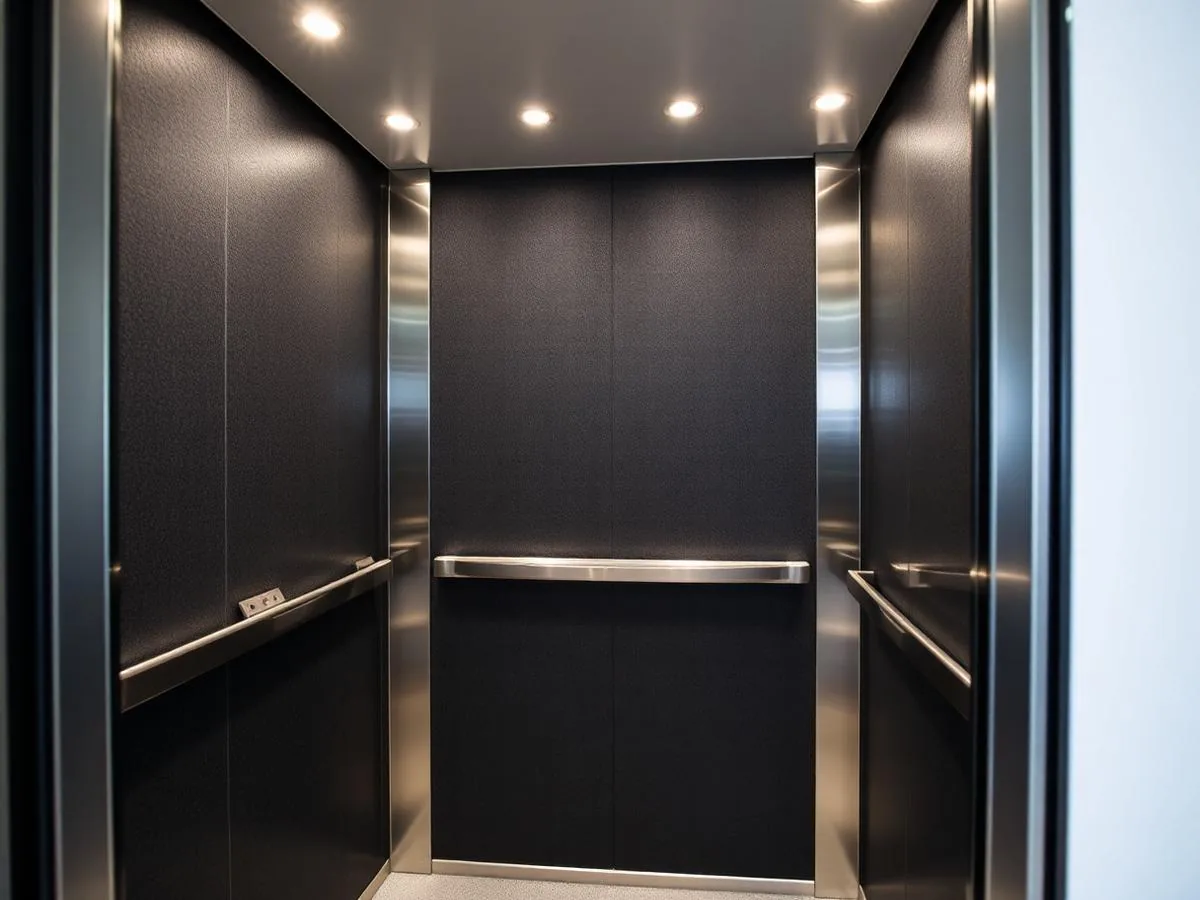
A tired lift car undermines an otherwise smart building, and everybody who visits spends thirty seconds staring at it. Replacing a car interior is a major cost and a long outage. Wrapping it in architectural film is an overnight job with a result that reads as a full refurbishment.
Typical turnaround
One overnight visit per car after survey
Areas we cover
Glasgow, Rutherglen, Cambuslang, East Kilbride, Paisley and most of Scotland
We survey the car with the lift engineer's cooperation, template each panel, then apply architectural film to the side and rear walls, the car doors and — where specified — the landing doors and frames on each floor so the scheme reads consistently from the lobby.
Stainless steel, painted steel and laminate car interiors all take film well. Scratched, dented or previously vandalised stainless is exactly the case film solves: the surface is levelled and cleaned, and the new finish hides the history.
Finishes that suit commercial buildings
Brushed and anodised metal effects are the safe choice for office and residential blocks. Timber and stone films suit hotels and higher-end commercial receptions. Solid matt colours work for branded corporate buildings, and full-colour printed graphics turn the car into a brand statement or an artwork.
For high-traffic residential and student buildings we specify anti-graffiti laminate, so tagging can be cleaned off or a sacrificial layer replaced rather than the whole wrap.
Downtime, access and safety
The car is out of service only while we are in it. A single car is typically wrapped in one overnight visit and back in service before the building opens; multi-car banks are staged so at least one lift keeps running throughout.
We coordinate with your lift maintenance contractor for isolation, keep all controls, indicators, emergency signage and certification plates clear, and never film over anything the engineer needs access to.
What we specify
Brushed and anodised metal-effect architectural films
Timber and stone-effect films
Solid colour matt and satin films
Full-colour printed graphics with protective laminate
Anti-graffiti sacrificial laminates
How we deliver the work
1. Car survey
We measure every wall, return, ceiling and door leaf inside the car, note the fixings, handrails and control panel positions, and record the existing finish.
2. Panel-by-panel artwork
Design is set out as a flat panel schedule so images wrap around corners correctly and nothing important is lost behind the handrail or the mirror.
3. Coordination with the lift engineer
The car is taken out of service for the shift with the maintaining engineer, isolated properly, and returned to service by them after we have finished.
4. Application
Brushed metal or printed film is applied to degreased panels, wrapped around edges where possible and trimmed tight to fixings, with door leaves done at the landing.
What affects the price
Every job is priced to the site, so we don't publish a fixed list. These are the main things that move the price. Send photos or measurements and we'll give you a clear, itemised quote.
Number of lift cars and panels
Finish: printed, textured or metallic films
Out-of-hours fitting to keep lifts in service
Condition of existing surfaces
Typical turnaround
A single lift car is normally a one-shift job, typically an evening or early morning so the building keeps its lift service during the day. Multi-car installations are scheduled one car at a time so at least one lift stays available.
What makes a good result
Film wrapped around panel edges rather than butted to them
Fire-rated media where the building specification calls for it
Handrails and fixings removed and refitted, not cut around
Isolation and return to service handled with the lift maintainer, never unilaterally
Standards, materials and compliance
The detail we work to on every job of this type — checked at survey, recorded on the specification and evidenced on request.
Fire performance
Interior films selected with the appropriate surface spread of flame classification for a lift car, which is an enclosed escape-critical space.
Lift engineer coordination
Work booked with your lift maintenance contractor so the car is isolated correctly and returned to service tested.
Materials
Brushed metal, timber and stone-effect architectural films with matched trims, wrapped around returns rather than butt-cut at the edge.
Frequently asked questions
How long is the lift out of service?
Typically a single overnight shift per car. We agree the isolation window with your lift contractor in advance.
Is film safe to use inside a lift car?
We use films appropriate to interior commercial use and keep all controls, indicators, emergency notices and inspection plates uncovered. Fire-rated options are available where the building specification requires them.
Can you wrap the landing doors too?
Yes, and it usually finishes the job properly — a wrapped car behind unwrapped landing doors looks half-done from the lobby.
What happens if a panel gets damaged later?
Individual panels can be re-wrapped without redoing the whole car. We keep the film reference on file so the replacement matches.
Does a lift wrap need fire-rated material?
In most commercial buildings, yes — interior linings inside a lift car usually need to meet the building's surface spread of flame requirement. We supply certified media and pass the certificates to your fire risk assessor.
How long is the lift out of service?
Typically four to six hours for a standard car, done outside business hours. We agree the window with your facilities team and the lift engineer before booking.
Related services
Work that usually runs alongside this one, delivered by the same team on the same visit where the programme allows.
Get a quote for lift & elevator interior wraps in Glasgow
Send sizes, drawings or site photos and we'll return a specification and a costed quote for lift & elevator interior wraps — usually within one working day.